

Blonde Colour Trends
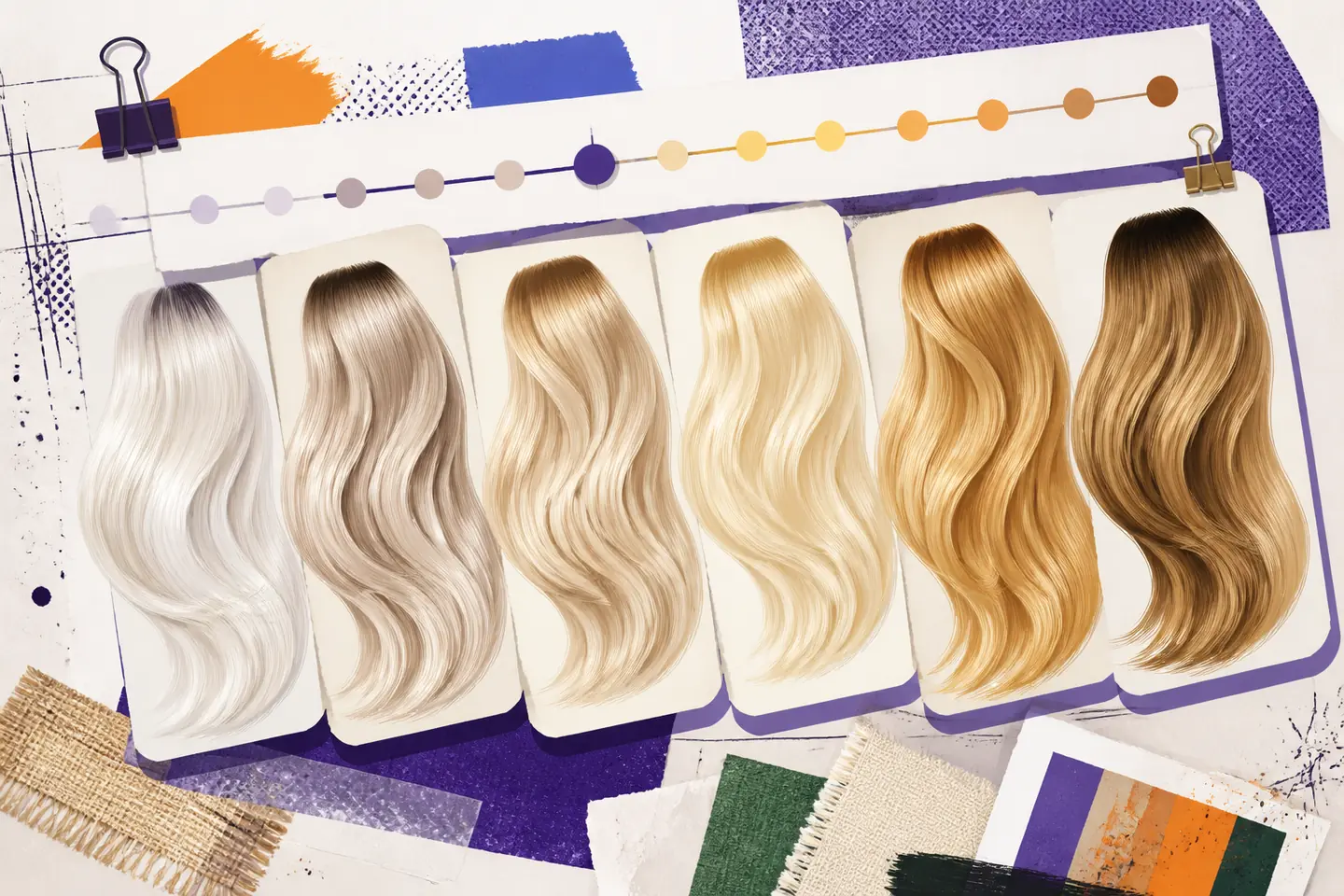
Modern blonde colour is less about choosing one fashionable shade and more about balancing tone, depth, placement and upkeep. Creamy beige, honey bronde, cool pearl and bright platinum can all work, but only when the result suits the starting colour and condition of the hair.
Before choosing a reference, decide how light you want to go, how much contrast you like and how visible the roots can become. These choices matter more than a trend name.
Start With the Result You Can Maintain
A useful blonde plan begins with three questions: how often you want to refresh the colour, how much lightening your hair can tolerate and whether you prefer warmth or coolness. A pale, even blonde shows regrowth sooner than a rooted blend, while a very cool finish can reveal yellow tones as toner fades.
Choose the Right Depth
Depth describes how light or dark the colour appears. Going blonde does not have to mean taking every strand to the palest level. Dark blonde, bronde and softly highlighted brown keep more natural pigment and can give useful brightness without removing all the underlying depth.
Darker strands help the hair look fuller and make lighter pieces stand out. A shadowed root, lowlights or untouched sections can provide contrast. With an even, high-impact blonde, the root line and tonal changes will be more obvious.
Use Undertone as a Guide, Not a Rule
Skin undertone can narrow the options, but it should not dictate them. Ash, pearl and cool beige tend to sit comfortably beside pink or blue undertones. Honey, caramel and golden beige often echo peach, olive or golden undertones. Neutral complexions can usually move between both groups.
Contrast matters too. Pale blonde beside dark brows or a deep root creates a graphic effect, while bronde makes a quieter transition. View references in daylight and indoor light because beige, gold and ash can shift between them. If uncertain, ask for a strand test or try a less extreme tone first.
Put Hair Condition First
Previous dye, bleach, straightening, perming and other chemical treatments affect what is safely achievable. Tell the colourist the full history, even when an old colour is no longer visible. Porous or fragile lengths may lift unevenly, absorb toner too quickly or break under further processing.
Hair that feels gummy, stretches excessively or snaps easily needs assessment. Dark, previously coloured or weakened hair may need gradual lightening. No treatment makes severely compromised hair safe for aggressive bleaching.
Four Useful Blonde Directions
Creamy Beige
Creamy beige sits between clearly warm and clearly cool blonde. It combines muted gold with beige, creating a soft finish without the silver cast of an icy shade. Fine highlights and a slightly deeper root keep it dimensional rather than flat.
This gives visible brightness without fighting every hint of warmth. Toner can refine the beige, while natural depth helps the colour grow out with a softer boundary.
Honey Bronde
Honey bronde blends light brown, amber and golden blonde. It works particularly well as ribbons through a brown or dark-blonde base because the untouched depth supports the lighter sections. Concentrating brightness around the face and through the ends gives a noticeable change without making the whole head equally light.
Do not automatically neutralise all warmth in this shade. Gold is part of the intended effect; too much violet or ash pigment can make it look dull. Ask for a balanced golden finish rather than an orange one, and judge the result in natural light.
Cool Pearl
Cool pearl uses pale beige, soft violet and muted silver rather than a hard grey tone. It needs a sufficiently light, even base: toner can adjust exposed warmth, but it cannot turn dark hair into pale blonde. Unevenly lightened hair may also take cool toner differently from section to section.
This shade is clearest when the hair is smooth and well conditioned. If the lengths are porous, a colourist may need separate formulas or shorter processing on the most absorbent areas. Use toning care only when yellow is actually visible, since over-toning can leave pale hair flat or lavender.
Rooted Bright Blonde
A rooted blonde keeps the natural root visible or adds a soft shadow between the root and lighter lengths. The result can still be bright, especially when the lightest pieces frame the face, but it avoids a single hard line across the parting.
The root shade should connect with both the natural base and the mid-lengths. If it is too dark or too wide, it can look like a separate band. A narrow, diffused transition usually reads as intentional and lets new growth merge into the colour more gradually.
Placement Changes the Whole Effect
Shade names describe tone, but placement determines how the colour behaves. Balayage places lightness selectively through the mid-lengths and ends, usually leaving more depth near the root. Fine highlights can spread brightness more evenly, while wider pieces create stronger contrast. Neither method is automatically low-maintenance; the result depends on how close the lightener sits to the scalp and how different it is from the natural base.
Face-framing pieces give immediate brightness with less overall lightening. Fine ribbons produce a subtle lift; wider pieces make a bolder frame. The upper edge should be blended so it does not become a stripe as the hair grows.
Haircut and texture also matter. Highlights that disappear in straight, one-length hair may become prominent in waves or layers. Curly hair often benefits from placement chosen while considering the curl pattern, so the light areas remain visible when the hair returns to its usual shape.
What Toner and Gloss Can Do
Lightening exposes underlying warm pigment. Toner adjusts that warmth after the hair has reached the required depth: violet counters yellow, while blue-violet can soften orange-yellow tones. It deposits tone rather than providing the main lift, so it cannot replace adequate lightening.
A gloss can refresh tone and add surface shine, either with pigment or as a clear treatment. Both toner and tinted gloss fade with washing, heat, sun, chlorine and strong cleansing. Porous ends may absorb more pigment than healthier roots, which is why one formula or processing time may not suit the whole head.
Care for Lightened Hair at Home
Use a gentle cleanser and condition the mid-lengths and ends whenever you wash. A moisturising mask can help when the hair feels rough, while occasional protein care may suit weak hair; stop if protein leaves it stiff or brittle. Detangle carefully, starting at the ends, and blot rather than rub with a towel.
Purple shampoo is a corrective tool, not a required daily cleanser. Use it when a cool or neutral blonde develops unwanted yellow, follow its instructions and rinse once the tone looks balanced. Warm beige and honey shades may need little or none, because removing too much gold works against the chosen colour.
Reduce avoidable heat. Let hair dry partly before blow-drying, apply a heat protectant intended for the tool you use and choose the lowest effective setting. Keep heated tools moving and avoid repeated passes over fragile ends. Protect hair from chlorinated water and rinse promptly after swimming, since pale, porous hair can pick up unwanted tones.
Clarifying can remove mineral or styling build-up, but frequent strong cleansing may dry lightened hair and strip toner. If the colour suddenly looks dull or changes after washing or swimming, ask whether build-up, porosity or fading is the cause before adding more pigment.
Plan the Consultation Clearly
Bring a small set of reference photographs showing the tone, brightness and placement you like. Choose examples with a similar starting depth and texture where possible. It is equally useful to identify what you do not want: a grey cast, strong gold, dark roots or bright face-framing pieces.
Ask the colourist to explain which parts of the reference are realistic for your hair now, which may require gradual lightening and how the proposed colour will grow out. Discuss your normal washing, heat styling and time available for upkeep. A good plan should describe the root, mid-length and end result separately, because each area may need a different approach.
Finally, agree on hair health as the limit. A useful choice keeps enough depth for dimension, reaches a maintainable tone and leaves the hair in a condition you can care for comfortably.