

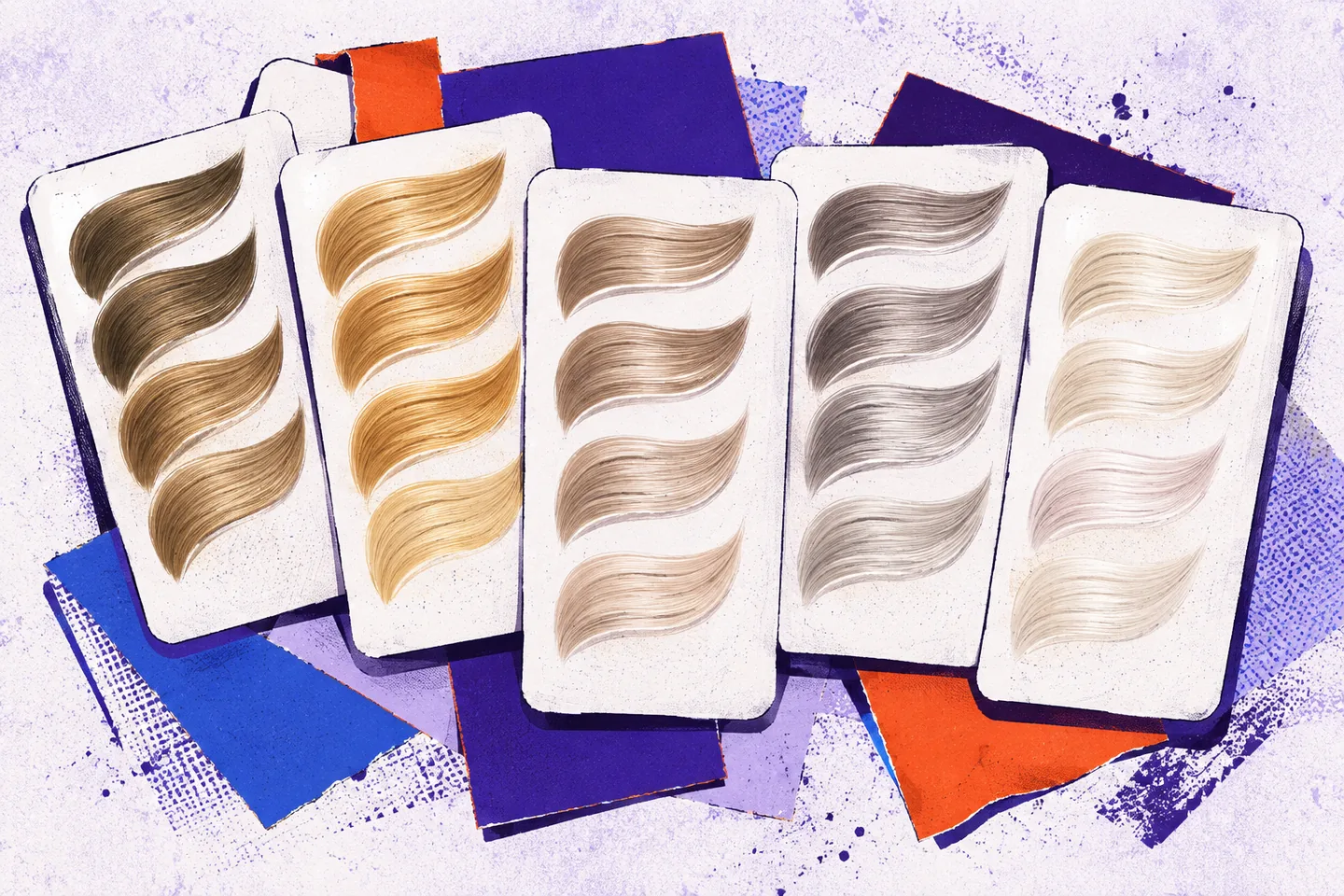
Blonde Hair Colour Chart
A blonde hair colour chart describes two things: how light or dark a shade is, and whether it leans warm, cool or neutral. Separating these makes it easier to compare swatches and explain the result you want.
A swatch is a reference, not a prediction. Your starting colour, previous treatments and hair condition affect the outcome. Use the chart to choose a direction, then assess whether that direction is realistic for your hair.
Reading levels and shade codes
Level means depth. In a common ten-level system, 1 represents black and 10 the lightest blonde. The blonde range usually begins around level 6, although labels differ between colour systems. Read the level and undertone chart supplied with the colour range you are comparing.
- Level 6: dark blonde. Close to light brown, with more depth than the other blonde levels. Lightening to this stage can leave noticeable orange warmth.
- Level 7: medium blonde. A deeper blonde that may show orange-yellow warmth beneath the finished tone.
- Level 8: light blonde. A distinctly blonde depth that can carry golden, beige or ash tones. Underlying warmth may appear yellow-orange.
- Level 9: very light blonde. A bright blonde depth with yellow underlying pigment, which can contribute to a creamy or golden appearance.
- Level 10: lightest blonde. A very pale depth with pale-yellow underlying pigment. Some platinum results sit here, but lightness alone does not create a cool finish.
These descriptions are a guide rather than a universal numbering standard. Underlying warmth describes pigment revealed during lightening, not necessarily the finished shade after toning. Roots, mid-lengths and ends may also have different levels.
Tone describes the colour within that depth. Two level 8 swatches can look quite different: one may be golden, the other smoky. Choosing a cooler tone does not automatically mean choosing a lighter colour.
Some shade codes put the level before a decimal point or separator, followed by numbers or letters for primary and secondary tones. Consult the shade-numbering explanation for that particular range. A code from one system should not be treated as an equivalent formula in another.
Warm, cool and neutral blonde
Warm tones
Warm blondes have gold, yellow, peach or copper qualities. Honey and golden blonde sit in this family; strawberry blonde introduces a reddish warmth. Caramel often describes a deeper, warmer result, so check its level as well as its name.
Warmth is not automatically brassiness. A golden finish may be intentional. The useful question is whether the visible warmth matches your chosen swatch. Describe the unwanted colour specifically: orange at the roots and yellow at the ends are different observations.
Cool tones
Cool blondes include ash, pearl and silver directions. Ash generally describes a muted, smoky quality, while platinum mainly describes extreme lightness. Names such as champagne and pearl are less precise, so compare the actual swatches instead of relying on the label.
Violet can help counter yellow, while blue can counter orange. However, toning is not a substitute for reaching the necessary lightness. Adding more cool pigment to an unsuitable base can leave a dull result rather than the pale blonde shown in a photograph.
Neutral tones
Neutral blonde balances warm and cool qualities. Beige often belongs here, combining restrained warmth with a muted finish. It can still lean slightly golden or cool. If two beige swatches look different, compare both their depth and their tone before deciding which better matches your reference.
Why your starting colour matters
Natural hair colour depends on the type and amount of melanin present. Blond hair contains relatively little eumelanin compared with brown or black hair. Read the MedlinePlus overview of hair color and melanin.
Lightening reveals underlying warmth in stages. Dark hair may show red or orange before reaching yellow. A pale ash reference therefore does not tell you how many stages darker hair will need, or whether its condition allows that degree of lightening.
Previously coloured lengths introduce another variable. Dye cannot be relied upon to lighten existing artificial pigment as it might lighten untreated hair. Dark bands, old highlights and porous ends may require different treatment within the same head of hair.
Condition belongs in the initial decision. Colouring and lightening can leave hair dry or brittle, and a dramatic change may be unsuitable for already damaged lengths. Read the American Academy of Dermatology’s hair-coloring guidance.
Compare swatches in a useful order
- Record your starting point. Look at dry hair in daylight. Note the natural root colour separately from coloured lengths and lighter ends.
- Choose a depth range. Narrow the choice to dark, medium, light or very light blonde before comparing subtle tone differences.
- Choose a temperature. Identify whether you want visible gold, balanced beige or a cooler ash or pearl direction.
- Check the full look. Compare root contrast and highlight placement, not just the palest strands in a photograph.
Compare neighbouring swatches within one chart first. Screen brightness, filters and warm indoor lighting can distort colour. A physical swatch under neutral light offers a better comparison, although it still cannot reproduce the condition or pigment of your own hair.
Bring a small selection of reference photographs rather than many conflicting examples. Point out exactly what appeals to you in each: the darker root, the beige lengths or the fine highlights. Include an example of a tone you want to avoid if words alone feel ambiguous.
One shade or several?
All-over blonde aims for a relatively consistent colour. Natural regrowth can be conspicuous when it contrasts strongly with the lighter lengths. The greater that contrast, the more prominent the root boundary may look.
Highlights and lowlights combine different depths. Their spacing and placement affect the overall impression: fine, closely spaced highlights can look much lighter than a few broad sections, even when both use the same blonde tone.
A darker root transition can soften the join between natural roots and blonde lengths. Ask to see the intended root, middle and end shades separately. A single swatch cannot describe a result built from several colour zones.
Think about how you normally wear your hair, too. A parting can expose a strong line of regrowth, while tying hair back reveals colour around the hairline and underneath. Show these views during the consultation. If your reference only shows loose waves from behind, it may hide the areas that matter most in your everyday style. Ask how the proposed placement will look with your usual parting and hairstyle.
Before choosing a formula
Write down your colour history, including home dye, henna, direct dyes, bleaching and chemical straightening. Mention which areas have been treated more than once. This helps distinguish untouched roots from lengths carrying several layers of processing.
For a substantial lift or colour correction, ask a colourist which target level is realistic, what warmth is likely to remain and whether a strand test is needed. Also ask what the alternative will be if the hair cannot tolerate the intended lightening.
If colouring at home, follow the supplied instructions, including the specified skin test. Do not continue using a colour that causes a reaction. Review the AAD’s testing and reaction advice.
Finish your consultation notes with a concrete description, such as “light beige blonde with a darker root and fine highlights”. Record the agreed depth, tone and placement alongside the chart reference so each part of the intended result is clear.