
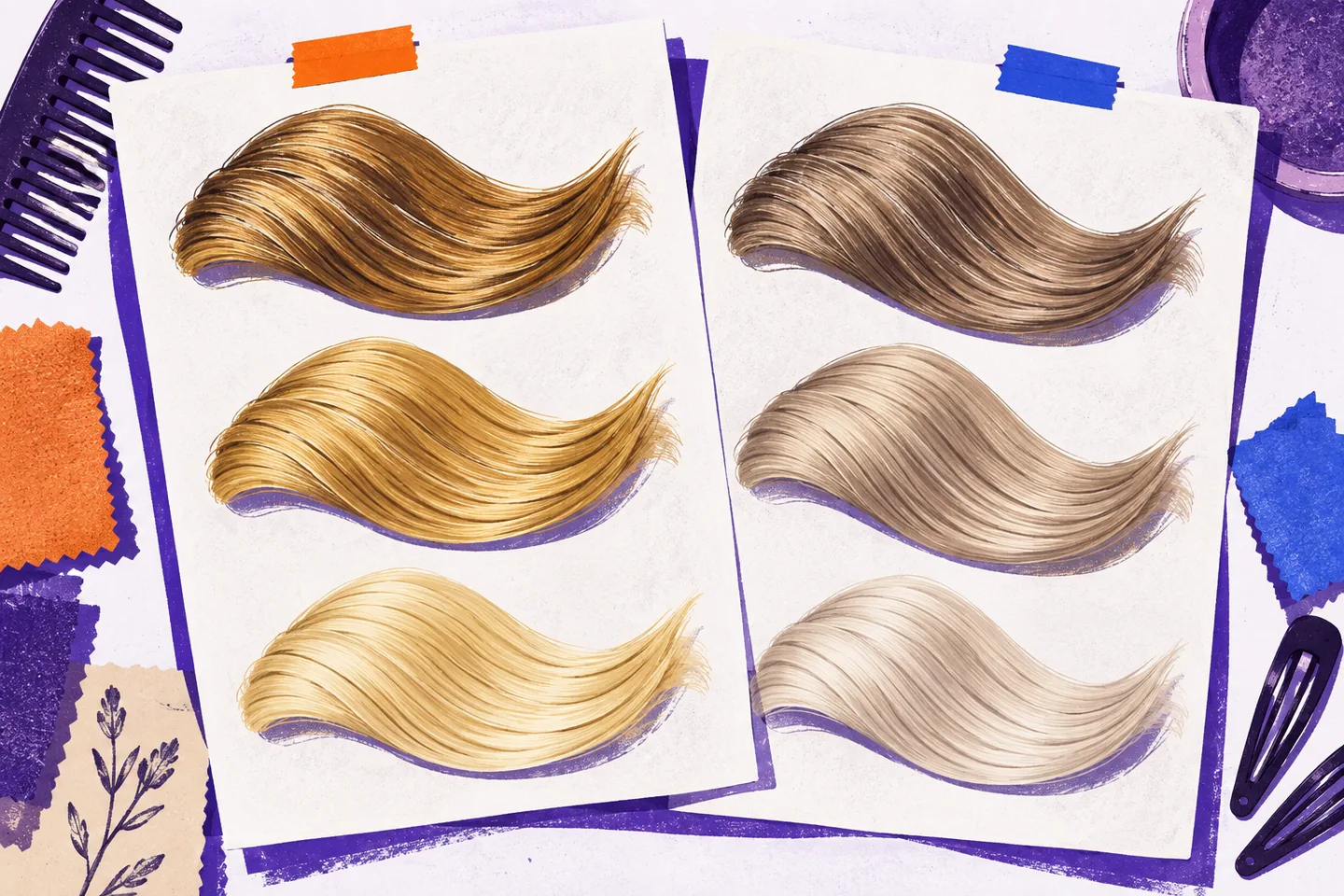
Blonde Hair Undertones: Separate Shade Depth from Warm and Cool Tone
Two blondes can be equally light yet look quite different: one golden, the other ash. If a reference photo looks too yellow or too grey beside your hair, the difference may be tone rather than lightness. Choose the depth you want first, then describe how warm or cool you want it to look. Your starting colour and the lighting in the photo matter too.
Level and tone answer different questions
Level describes how light or dark hair is. Tone describes its colour character. A golden blonde and an ash blonde can sit at roughly the same level while one reads warm and the other cool. Wella explains this distinction in Wella’s guide to hair levels and tones. Shade names and numbering systems vary between colour ranges, so compare actual swatches rather than treating a number as a universal match.
Warm blondes may be described as golden or honeyed; cool ones as ash or muted. Neutral and beige often suggest a balance, but neither name tells you exactly how a particular swatch will look beside another. Start with these comparisons:
- Hold the level steady: Compare dark golden blonde with dark ash blonde, or light golden blonde with light ash blonde. The warmth changes while the approximate depth stays the same.
- Hold the tone steady: Compare dark golden blonde with light golden blonde. Both lean warm, but the depth changes.
- Check the middle: Put a neutral or beige swatch between warm and cool swatches at a similar level. It may help you describe how much warmth you want to see.
This separates two requests that are easily confused. “Less gold” asks for a change in tone; “lighter” asks for a change in level. One does not necessarily produce the other. The same distinction helps when a blonde looks too grey: the desired adjustment may be more warmth, not a darker result.
Read a reference photo in two passes
First compare its overall depth with your current lengths. Is it darker, similar or lighter? Look at your roots separately if they differ from the rest of your hair. Then judge the tone at that depth: does the blonde read golden, muted or fairly balanced? Look beyond the brightest strands. A photo with a deeper root and pale highlights does not show one uniform shade.
Cover the colour words in a caption and look at the hair itself. A name such as “beige blonde” might point you towards useful swatches, but the image may show a cooler face frame, warmer ends or deliberate contrast between sections. Point to the part you mean. “I like this lightness but want less gold around my face” is clearer than asking for the shade name alone.
Bring more than one reference if you can. A second view of similar hair in different light helps show whether its tone is consistent. An example you dislike can also be useful: show what looks too gold, too grey or too pale to you. Those preferences give the discussion a boundary without assuming that a photograph can be copied exactly.
Account for your starting hair
A naturally darker root, previously lightened ends and an older coloured section are different starting points. Existing warmth can become noticeable as hair is lightened. Wella’s professional education material explains underlying pigment and prior colour as part of colour planning, and its examples record earlier colour and hair condition. Tell your colourist about dye and lightening, including work done at home, so each area can be assessed.
If your lengths are darker than the reference, ask how much lightening the target would require. If they are already light but look warmer than you want, ask whether the main difference is tone. If roots and ends differ, discuss both rather than judging the plan by its palest strand. The result may need a deeper root, a different balance through the lengths or more than one stage; the answer depends on the hair being assessed.
Condition can limit a lightening plan. The American Academy of Dermatology notes that colouring and bleaching can make hair dry and brittle, with greater lightening increasing the risk of damage. Its advice also covers following directions for home colour and watching for reactions: see Its colouring and perming guidance. If your ends feel fragile or have been treated repeatedly, say so before agreeing on a target. A slightly deeper blonde or a staged goal may be a more useful discussion than insisting on the lightest part of a photo.
Check the lighting
Warm indoor light can make blonde hair appear more golden; cooler light can make it look more muted. Shadows deepen the apparent root, while bright highlights can make a few strands look lighter than the overall colour. Camera settings and image editing add another source of variation. Treat a reference as a way to explain your preference, not as a fixed colour measurement.
Look for a daylight view and an indoor view of the same style. In each, compare the root, middle and ends, not just the most illuminated section. Ask yourself whether you like the overall lightness, the warm or cool finish, the contrast between sections, or simply the way it catches the light. If only one heavily lit image shows the tone you want, bring another example that makes your preference easier to recognise.
You can check your own hair in the same way. Photograph the same section in indirect daylight and under the indoor lighting you normally use. Keep the angle and exposure as similar as possible. This will not diagnose what colour work you need, but it can show which differences come from the light before you discuss changing the hair itself.
Questions to take to a consultation
A consultation is most useful when it establishes the starting point before settling on a target. Bring your reference and your colour history, then work through these questions with the person assessing your hair. If swatches are available, compare them beside the sections you want to change. Look at the lengths and roots separately and use a second light if the room's lighting makes every sample look warm or cool:
- What level are my roots and lengths now? Compare both with swatches if they differ, rather than describing the whole head as one shade.
- Which part of the photo is the target? Point to the depth, tone and placement you mean. Say whether you want the root and ends to match.
- Can we compare warm and cool swatches at a similar level? This isolates the tone choice from the lightness choice.
- How does my colour history affect the result? Mention dye, highlights, lightening and sections treated more than once.
- What is realistic for my hair’s condition? Ask which parts of the reference are achievable now and whether the goal needs adjusting.
- How should we assess the finished colour? Agree to view its depth and tone in more than one light.
If you have grey or white hair, discuss the appearance you want at the roots as well as through the lengths. Skin undertone can inform your preference, but it does not assign you a single correct blonde. You may prefer warm gold, cool ash or a balance regardless of a label attached to your skin. Use swatches against your own hair and look at them in lighting that resembles everyday conditions.