

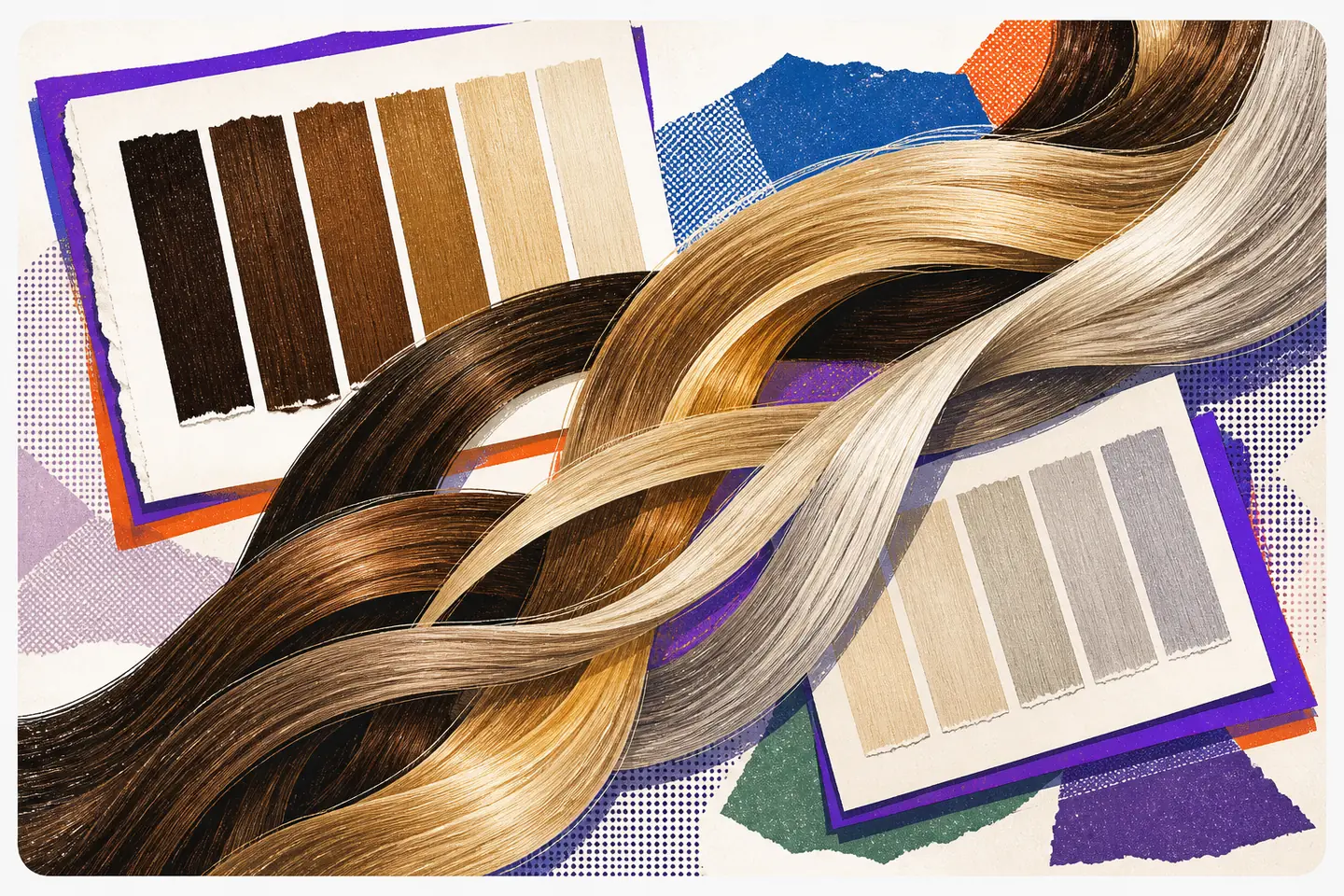
Blonde Highlights with Brown Hair
Blonde highlights can add contrast and movement to brown hair without hiding the brunette base. The most convincing result is not simply the lightest blonde available. It is a combination of tone, placement, contrast and condition that suits the starting colour and the way the hair is cut and worn.
Begin by deciding what you want the highlights to change. Fine pieces can soften a solid brown colour, brighter sections around the face can draw attention to a fringe or cheekbones, and wider ribbons can make layers more visible. This guide explains the choices to make before lightening, what to ask during a consultation and how to care for the result.
Choose the level of contrast first
Contrast determines the overall character of the colour. A dark brown base with pale blonde pieces looks graphic and makes regrowth easy to see. A medium brown base with caramel, honey or beige highlights creates a quieter transition. Neither approach is inherently more flattering; the useful question is how distinct you want each light section to look.
Reference photographs help, but compare them carefully. Look for examples with a similar base depth, hair length, texture and density. A highlight pattern that reads as delicate on thick, wavy hair may look much bolder on fine, straight hair. Save examples of what you dislike as well as what you want. Pointing out unwanted stripes, excessive warmth or an overly pale hairline is more precise than asking for a “natural” result.
For a broad range of visual references, compare Southern Living, Latest Hairstyles and The Hairstyle Edit: Brown Hair Colors with Blonde Highlights. Treat photographs as a way to discuss placement and tone, not as a promise that different hair will lift or fall in the same way.
Match the blonde tone to the brown base
Brown hair reveals warm underlying colour as it lightens. Darker starting colours often pass through red, orange and gold stages before reaching a pale yellow. Toner can refine warmth after the hair has lifted, but it cannot make hair substantially lighter. Trying to cancel strong orange tones with an unsuitable cool toner may leave the result dull rather than clean.
Warm blonde is often the most practical direction when the hair lifts to gold or orange-gold. Caramel, honey and golden beige can work with that warmth instead of fighting it. Neutral beige gives a more muted finish when the hair has lifted evenly. Cooler blonde requires a sufficiently light, even base and may need more regular toning because small changes in warmth are easier to notice.
Skin undertone can inform the choice, but it is not a fixed rule. Clothing colours, natural brow colour and personal preference matter too. Test a few swatches near the face in daylight: one warm, one neutral and one cool. The best option should sit comfortably beside both the complexion and the visible brown base.
Select placement for the haircut and upkeep
Fine highlights and babylights
Very fine highlights spread brightness through the hair while preserving depth between sections. They suit someone who wants an even, blended result rather than obvious ribbons. Fine sections near the parting can also make regrowth less abrupt, although highlights placed close to the scalp will still need attention as the hair grows.
Foiled ribbons
Foils allow controlled sectioning and can produce brighter, more defined pieces. Wider ribbons show clearly on waves and layered cuts, while narrow foils can build brightness gradually. Ask where darker hair will remain; leaving deliberate depth prevents the blonde from merging into one flat block.
Painted highlights
Hand-painted placement can keep the root area softer and concentrate lightness through the mid-lengths and ends. The word balayage describes an application method, not one guaranteed finished look. It can be subtle or bold, warm or cool. Discuss the intended pattern and final tone rather than relying on the technique name alone.
Face-framing pieces
Lighter sections around the face create immediate brightness with fewer highlighted strands. Their visibility also means uneven tone, dryness and regrowth show quickly. A soft face frame blends into neighbouring sections; a strong “money piece” is wider and intentionally separate. Decide which effect you want before the front sections are lightened.
Prepare for a useful consultation
Give a complete colour history, including permanent dye, home colour, henna, previous lightening and colour removers. Pigment inside the hair may affect the lift even when the old colour is no longer obvious. Also mention breakage, chemical straightening, frequent heat styling and any areas that behave differently when wet.
A strand test can show how one small section lifts and how it feels afterwards. It is particularly useful when the history is uncertain or the ends have been processed several times. If the test remains too warm, lifts unevenly or becomes weak, a darker blonde, fewer highlights or a staged plan may be safer than forcing the target in one visit.
Useful questions include:
- How light can the hair reasonably become while keeping its condition?
- Which sections will be lightened, and where will the brown base remain?
- Will the result be warm, neutral or cool after toning?
- How will the placement look with the usual parting and natural texture?
- What signs would mean the next lightening session should be delayed?
Agree on priorities if the exact reference cannot be reached at once. Preserving length, achieving a cool tone and making very dark hair pale may conflict. Ranking those aims gives the colourist a clearer basis for adjusting the plan.
Protect condition during and after lightening
Previously lightened hair should not be treated as though it were untouched. Repeated overlap on pale sections can create weak bands and brittle ends. During a retouch, the aim is usually to address new growth or selected darker areas without repeatedly saturating the lightest lengths.
Afterwards, use a gentle cleanser and condition the mid-lengths and ends whenever they are washed. Add a richer mask when the hair feels rough or tangles more than usual, but do not assume that a heavy coating repairs structural damage. If strands stretch excessively, snap or feel gummy when wet, reduce heat and seek professional assessment before further chemical work.
Heat protection matters because highlighted sections may be less tolerant of repeated high temperatures. Apply a protectant as directed, dry the hair fully before using straighteners or curling tools, and choose the lowest temperature that produces the intended finish. One controlled pass is preferable to repeatedly working the same section.
Control tone without overcorrecting
Toner and gloss adjust the appearance of highlights after lifting. They gradually fade through washing, sun exposure and normal wear, so the tone may become warmer before the placement itself needs refreshing. A gloss appointment can refine colour without adding more highlights when the existing pattern is still in the right place.
Purple shampoo deposits violet pigment that can soften visible yellow in pale blonde sections. It does not lighten hair, remove orange pigment or replace a tailored toner. Use it only when yellow is the problem, follow its directions and alternate it with an ordinary colour-safe cleanser. Porous ends may take up more pigment and look grey or violet if the product is used too often.
Hard-water deposits, swimming and product build-up can also change how blonde appears. If the colour suddenly looks dull, do not assume more purple pigment is the answer. Ask whether cleansing, chelating or a salon tone adjustment is appropriate for the cause.
Plan maintenance around placement
There is no universal retouch interval. Hair growth, contrast, placement, washing habits and tolerance for visible roots all affect the schedule. Bright foils placed at the scalp usually show a clear line sooner than a rooted, painted pattern. Face-framing pieces may need selective attention while the back remains balanced.
Separate tonal maintenance from lightening. When warmth returns but the highlights are still well placed, a toner or gloss may be enough. When the root area loses the intended balance, a partial retouch may be more suitable. A full set should have a clear purpose rather than being the automatic choice at every visit.
At home, judge the hair by condition as well as colour. Keep a routine you can repeat: gentle washing, regular conditioning, careful detangling and moderate heat. Protect the hair from prolonged strong sun and rinse it after swimming. These habits will not stop colour from changing, but they can reduce avoidable dryness and help the brown-and-blonde contrast remain clear.
A concise decision checklist
- Choose subtle, moderate or bold contrast before choosing a technique.
- Select reference photographs with a similar base colour, cut and texture.
- Disclose the full colour and chemical-treatment history.
- Agree where depth will remain and how the front sections will be placed.
- Choose a blonde tone the hair can reach evenly without forcing lift.
- Plan separate responses for regrowth, fading tone and changes in condition.