

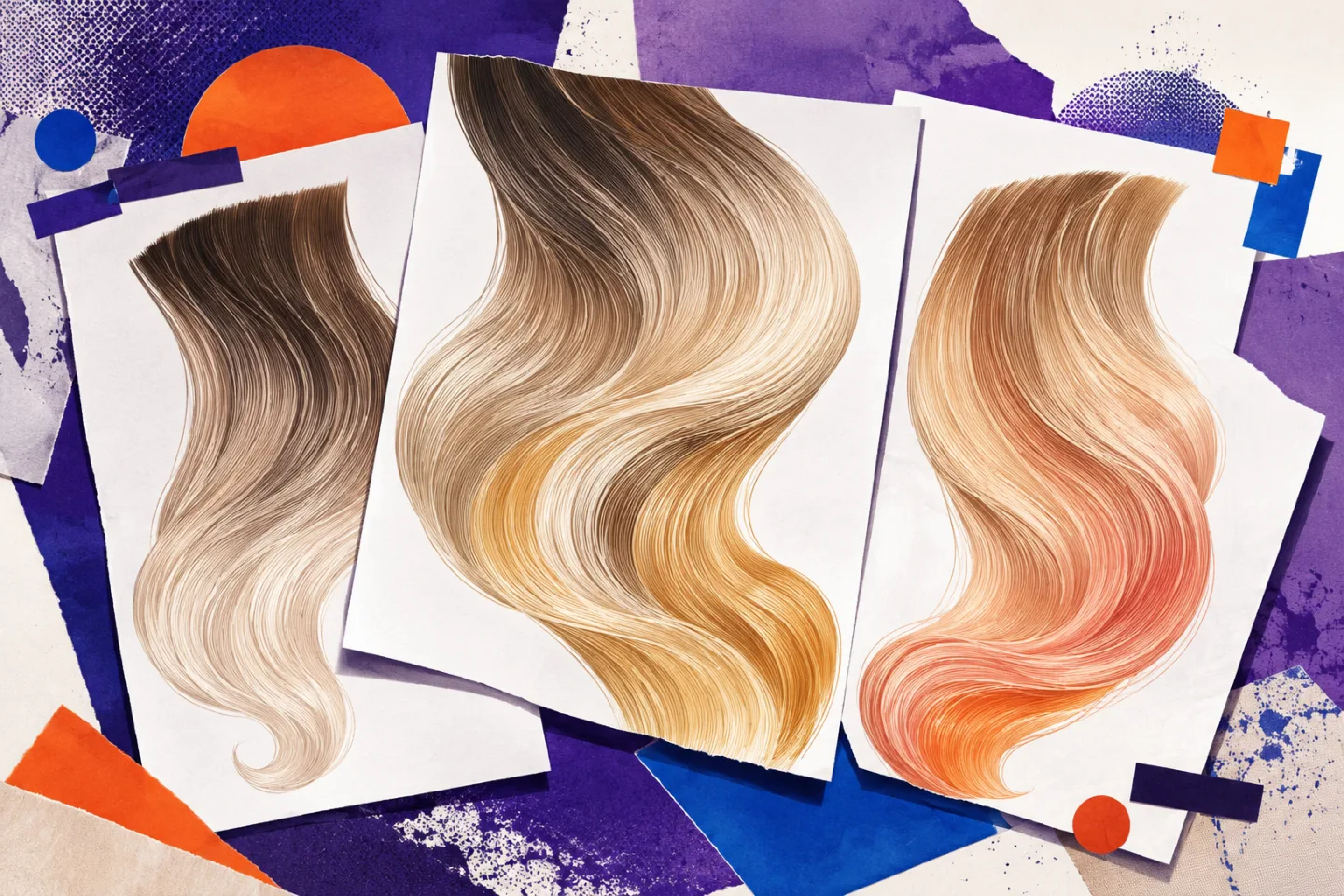
Summer 2025 Blonde Hair Trends
The useful ideas behind summer 2025 blonde hair trends are warmth, blended roots and varied tones rather than one uniform shade. Honey highlights, muted strawberry and beige lengths offer different ways to introduce brightness. Choosing between them starts with your existing colour, its condition and how much upkeep you want.
Use trend names as descriptions, not formulas. Two photographs labelled “honey blonde” may show different levels of lightness and warmth. A consultation should establish which parts you like: the colour beside the face, the depth at the roots or the contrast through the ends.
Warmth and dimension
A dimensional blonde contains lighter and darker sections. Those differences can be subtle: a deeper root, beige lengths and a few pale pieces around the face. Warmth is a separate choice. You can have varied tones in a neutral blonde or a relatively uniform golden shade.
For visual context, Read the summer 2025 trend report at Allure and the shade-focused forecast at Allure’s 2025 hair color guide. Treat seasonal references as a vocabulary for discussing colour, rather than a reason to replace a shade that already works for you.
A root shadow can soften the contrast between natural regrowth and lightened lengths. Lowlights introduce darker sections where blonde looks too uniform. A gloss may adjust the tone of existing lightness; it does not make every starting colour capable of matching a pale reference.
After-sun blonde
After-sun blonde describes brighter pieces with a softened root transition and a beige or golden finish. It borrows the appearance of uneven natural lightening without requiring deliberate sun exposure. The colour is usually less uniform than an all-over pale blonde.
Ask where the brightest sections will sit. Lightness around the face gives a different effect from pale ends or fine highlights distributed throughout the hair. Look at references with your usual parting and hairstyle: a colour that looks blended in waves may show stronger stripes when worn straight.
If your hair is already light, a tonal adjustment may achieve the effect you want. Darker or previously coloured hair may need lightening first. Separate the desired tone from the desired brightness so that the consultation addresses both.
Soft-shadow roots
A soft-shadow root keeps or creates a deeper colour near the scalp, then blends it into lighter lengths. Decide how much depth you want and how far down it should extend. A narrow root blend and a broad dark section produce noticeably different results.
This approach can suit beige, honey or strawberry lengths. It may soften the appearance of regrowth when the root shade is close to your natural colour, but it does not establish a fixed maintenance schedule. Toner fading and the placement of highlights still matter.
Ask to see the intended transition with your hair pulled back as well as loose. The hairline can look much brighter than the crown, especially when pale sections frame the face. Mention whether you regularly wear a ponytail or change your parting.
Honey and amber blonde
Honey blonde combines beige and gold; amber suggests a stronger warmth, sometimes with a copper impression. Neither name identifies one standard colour. Choose whether you want a restrained golden reflection or a shade that looks visibly warm even away from direct light.
Warm highlights over a darker base create a different result from a golden gloss over pale lengths. Placement affects the overall impression as much as the shade itself. If you prefer some depth, show a reference that retains darker sections instead of selecting an entirely pale blonde.
When moving from a cool blonde, discuss how much warmth will be introduced and how the tone may change with washing. When moving from brunette, establish what lightness is realistic before settling on a precise honey reference.
Strawberry, peach and apricot tones
Strawberry blonde sits between blonde and red. Peach and apricot describe related effects with a pink or orange cast. Say whether you want the finished colour to read as blonde first, red first or an even balance between them.
A few warm pieces around the face offer a smaller change than applying the tone throughout the lengths. Sunset balayage uses this colour family selectively, with painted sections and a deeper root. Discuss the placement separately from the colour: you may like the blend in a photograph but dislike its copper intensity.
Reference images help distinguish a barely rosy blonde from a stronger apricot shade. View them without filters where possible, and ask how fading may alter the balance. A result that begins peachy may not remain identical between colour appointments.
Check the starting point
Colour history
Tell the stylist about permanent dye, bleach, direct dyes and chemical treatments, including home applications. Previously coloured lengths and natural roots may respond differently. An accurate history is more useful than assuming an old treatment no longer matters because its colour has faded.
Discuss the extent of the change alongside The AAD’s coloring and perming guidance. A large increase in lightness requires a different assessment from adjusting the tone of existing highlights. Ask what can be achieved now and what would need a staged approach.
Condition
If your hair is fragile or breaking, discuss its condition before requesting further lightening. A less dramatic colour change may be more appropriate than pursuing the palest part of a reference image. Do not assume a gloss or darker finish reverses damage already present.
Ask whether a strand test is appropriate, particularly when the colour history is complicated. It can help assess the response of a small section, but it is not a promise of an identical result everywhere. Follow the relevant application and allergy-testing instructions for the colour being used.
Plan care around your routine
Consider swimming, sun exposure, washing and heat styling when discussing upkeep. See the AAD’s summer hair-care recommendations. Covering hair in strong sun and rinsing after swimming are practical habits to build into a summer routine.
Choose care according to your hair’s condition and the intended tone. Purple shampoo is not automatically necessary for every blonde, particularly when gold is part of the chosen colour. Ask what an unwanted colour change would look like before trying to correct it, and follow the directions rather than increasing use by guesswork.
Separate colour maintenance from styling expectations. A photograph with carefully formed waves may show highlights more clearly than your everyday finish. Ask to see examples on a texture similar to yours, and explain how you usually dry and arrange your hair.
What to take to a consultation
Choose one main objective: brighter framing, warmer lengths, softer roots or a strawberry shift. Bring a small set of references that makes the differences clear rather than a large collection of incompatible shades.
- Show an overall colour you like and identify its lightest and darkest areas.
- Include a root transition you would be comfortable seeing as the hair grows.
- Bring an example of an unwanted result, such as strong copper or stark highlights.
- Explain your usual washing, swimming and styling habits.
- Discuss how the colour may fade and what maintenance each option involves.
Before proceeding, agree on the shade, placement and realistic extent of lightening. If your reference cannot be achieved in the planned session, establish which feature matters most and choose a workable first step.